Key takeaways
- Open wood fireplaces are beautiful, but they give little heat for the wood they burn.
- Inserts and stoves put far more of the heat in the room.
- Gas is easy and clean, with a yearly check and cleaning.
- Whatever you choose, venting and clearances matter more than anything.
Open wood fireplaces
An open fireplace is about the look, the sound and the tradition. Much of its heat goes up the chimney, along with warm room air. It also needs the most work: wood, kindling, ash removal and sweeping.
If you love it, keep it safe with a sound flue, a working damper and a screen.
Inserts and freestanding stoves
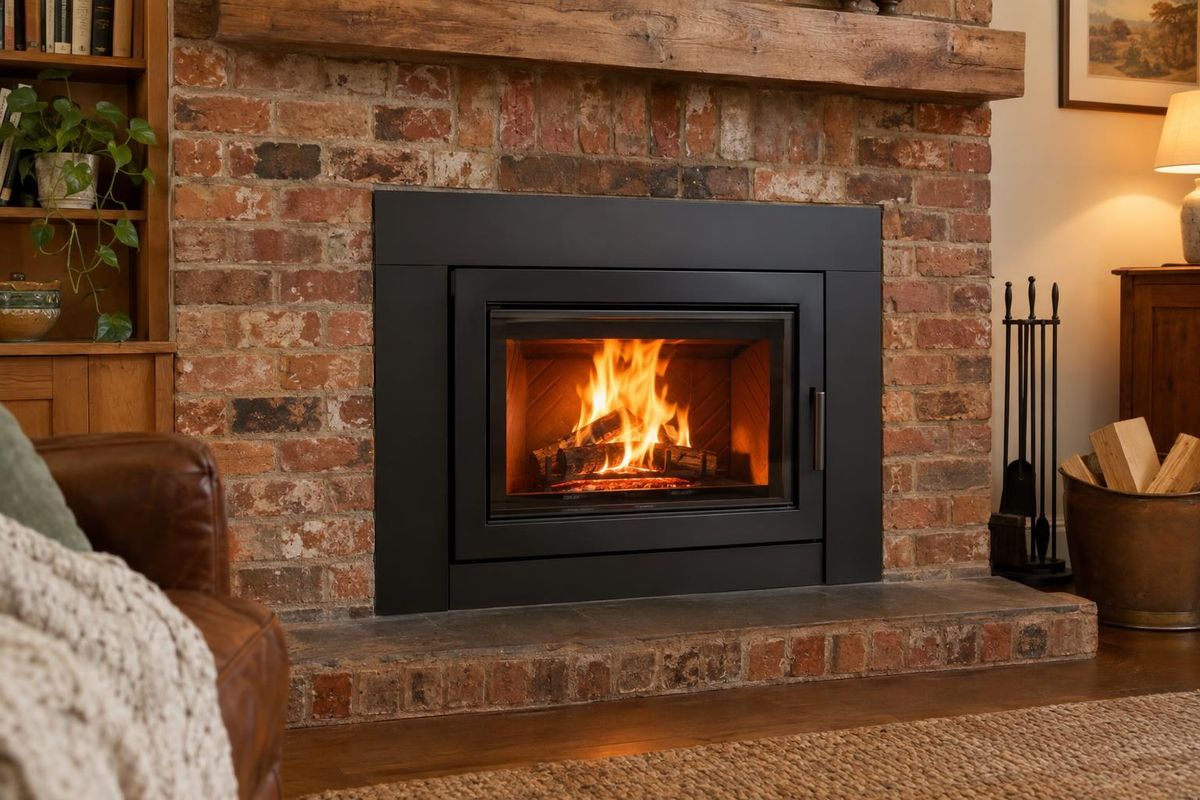
An insert fits inside a fireplace opening, and a stove stands on a hearth pad with a pipe. Both hold the fire in a sealed box with controlled air, so they use wood far more efficiently and put out useful heat. They need a proper liner or pipe, a protected hearth and the manufacturer's clearances.
They also need to be swept, since small flues build creosote faster.
Gas fireplaces and logs
Direct-vent gas fireplaces exhaust outdoors and draw combustion air from outside, which keeps room air clean. Vented gas log sets sit in an existing fireplace and need the flue open. Vent-free units have special rules and are not allowed everywhere.
Gas needs less work, but the burner, the glass and the vent still need a yearly check.
How to choose
Ask what you want most: the experience of a wood fire, useful heat, convenience or low upkeep. Think about wood supply and storage, the chimney you have and what your local rules allow. A good installer will explain the trade-offs and the venting each one needs.
Any new appliance should be installed to its listing and inspected afterward.
Official sites to explore
Brand names and logos belong to their owners. These links open the official websites in a new tab, and we are not affiliated with them.
- Hearth, Patio & Barbecue AssociationIndustry information on fireplaces, stoves, inserts and safe operation.
- EPA Burn WiseHow to burn wood cleaner and more efficiently.
- U.S. Department of Energy: Energy SaverHome energy guidance, including fireplaces and wood heating.
- National Fire Protection AssociationFire and life safety codes, standards and public education.
- Chimney Safety Institute of AmericaChimney safety information, inspection levels and homeowner guidance.
Quick answers
Is a wood insert worth it?
If you want heat from a fire and have a wood supply, it often is. It uses wood much more efficiently.
Can I convert my fireplace to gas?
Often yes, with logs, a burner or a direct-vent insert.
Which needs the least maintenance?
Gas, though it still needs a yearly check.